Author: averychernin@gmail.com

  • 7 Signs You Need More Than a Habit Tracker (What Works Better)

    7 Signs You Need More Than a Habit Tracker (What Works Better)

    You’ve tried three different habit trackers this year. You log your daily tasks religiously for two weeks, then the checkmarks slow down, and by week four, you’ve stopped opening the app entirely. The problem isn’t your willpower. Traditional habit trackers measure consistency, not progress toward meaningful outcomes. If your goals involve complex behavioral changes like building a business, transforming your health, or deepening relationships, checking a box doesn’t address the real obstacles holding you back.

    Table of Contents

    Quick Takeaways

    Key Insight Explanation
    Complex goals need adaptive programming Habit trackers assume static routines work, but career growth and relationship development require strategy adjustments based on real-time feedback.
    Binary completion misses nuance Checking a box doesn’t capture quality, intensity, or contextual factors that determine whether an action drives meaningful progress.
    Motivation depends on visible outcomes Tracking streaks without connecting them to measurable results creates false momentum that collapses when you don’t see life improvements.
    Multiple life domains need integrated systems Professionals balancing health, career, and relationships can’t afford separate trackers that don’t account for trade-offs and resource allocation.
    Psychological barriers require coaching Procrastination, self-sabotage, and limiting beliefs can’t be solved by reminders. You need someone or something that addresses the underlying patterns.
    Generic templates ignore individual constraints The habits that work for a 25-year-old single entrepreneur differ dramatically from those for a 40-year-old parent with caregiving responsibilities.
    AI coaching provides personalized accountability Intelligent systems that learn your patterns, adapt recommendations, and provide context-aware guidance deliver outcomes traditional trackers cannot.

    Your Goals Require Adaptive Strategy, Not Repetition

    Habit trackers excel at reinforcing consistent behaviors like drinking water or taking vitamins. They fail spectacularly when your objective involves navigating uncertainty, making strategic decisions, or responding to changing conditions. Building a consulting practice requires different actions in month one versus month six. A static habit of “send three cold emails daily” doesn’t account for when your calendar fills up and you need to shift from acquisition to delivery.

    In practice, goal-oriented professionals hit plateau points where repeating the same behaviors produces diminishing returns. A runner improving from couch to 5K benefits from consistency. A runner trying to qualify for Boston needs periodization, recovery protocols, and strategic race selection. The data consistently shows that complex skill development follows non-linear progression curves, yet habit trackers treat every day as identical.

    Pro tip: If your goal involves learning, creating, or building something that doesn’t exist yet, you need a system that adjusts your action plan based on what’s working, not one that merely tracks whether you showed up.

    Image is being generated...

    You Need Context-Specific Feedback, Not Binary Completion

    Checking a box tells you nothing about execution quality. You can complete “exercise for 30 minutes” by scrolling your phone on a stationary bike or by doing a focused strength session that drives adaptation. Traditional habit trackers measure adherence, not effectiveness. When you’re trying to lose 20 pounds, build meaningful business revenue, or deepen a relationship, the how matters as much as the whether.

    A common mistake is conflating activity with progress. Professionals using basic trackers often accumulate impressive streaks while making minimal forward movement toward their actual objectives. They meditate daily but still experience chronic anxiety. They network weekly but generate no business opportunities. Without feedback mechanisms that evaluate whether your actions produce intended outcomes, you’re optimizing for the wrong metric.

    AI coaching platforms analyze patterns across your behaviors and outcomes to identify what’s actually moving the needle. If your morning routine includes journaling but your self-reported stress levels haven’t changed in six weeks, an intelligent system flags the disconnect and suggests alternative approaches. Habitify and similar apps can’t do this because they lack outcome tracking and adaptive intelligence.

    Motivation Fades Without Meaningful Progress Tracking

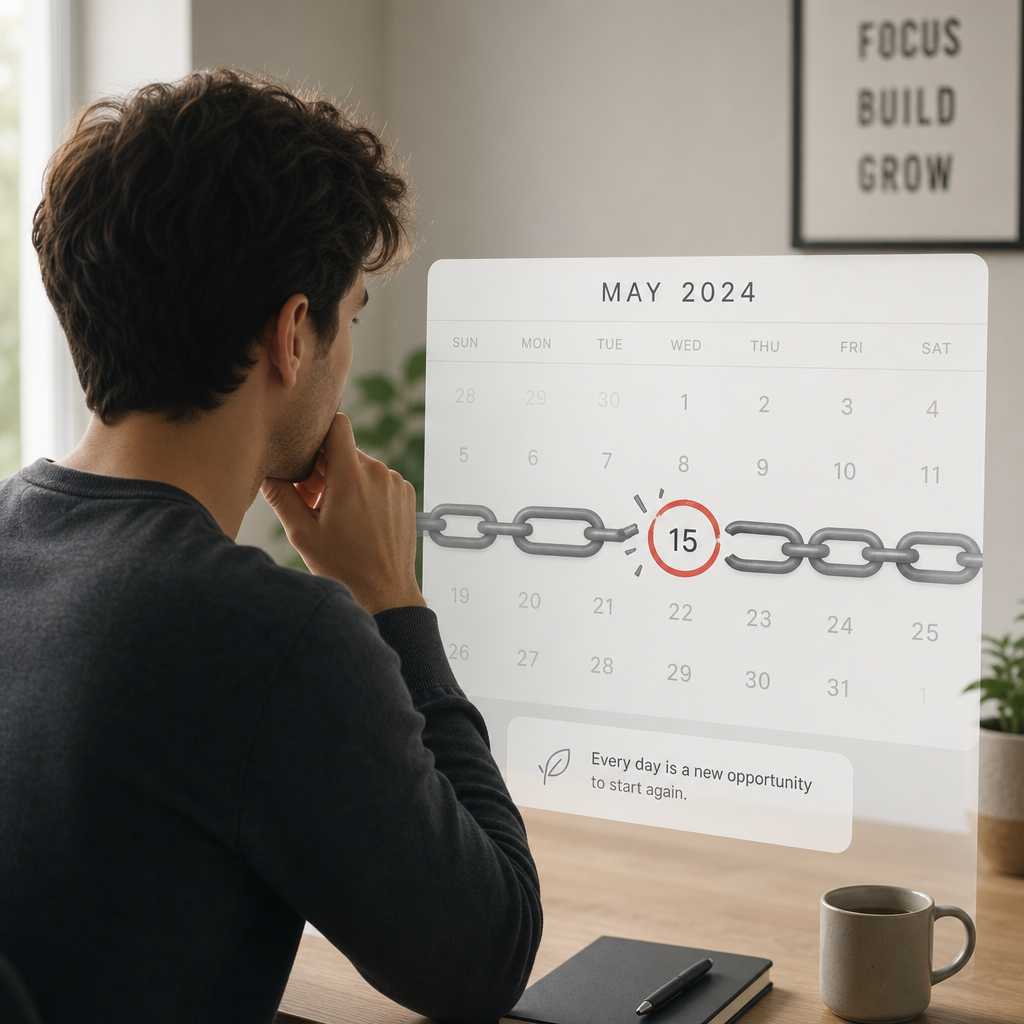
    Streak maintenance becomes an empty ritual when it’s disconnected from tangible life improvements. You hit a 90-day meditation streak, but you still snap at your partner and feel overwhelmed at work. The cognitive dissonance between your consistent behavior and your unchanged circumstances drains motivation faster than breaking the streak would have.

    According to research on goal psychology, people sustain effort when they perceive progress toward valued outcomes. Habit completion provides a sense of accomplishment, but it’s shallow and temporary compared to seeing measurable improvements in areas that actually matter to you. A business owner who tracks “work on business strategy” as a daily habit gets far less motivational fuel than one who sees monthly revenue climb from $5K to $12K over three months.

    “People don’t want to build habits. They want to solve problems and achieve goals. Habits are just a potential means to that end.” – James Clear, author of Atomic Habits

    Goal accountability tools connect daily actions to weekly outcome metrics. Instead of celebrating that you completed five workout sessions, you celebrate that you lost two pounds and increased your deadlift by 10 pounds. The emotional payoff shifts from process compliance to results achievement, which sustains momentum through inevitable rough patches.

    You Juggle Multiple Life Areas Simultaneously

    Most professionals aren’t optimizing a single domain. You’re simultaneously trying to advance your career, maintain your health, nurture relationships, manage finances, and perhaps learn new skills. Habit trackers treat each area independently, creating a fragmented view that ignores resource constraints and trade-offs.

    In practice, excelling in one area often requires temporarily deprioritizing others. Launching a new product might mean your workout frequency drops from five days to three. Traditional trackers show this as failure in your health category, generating guilt and demotivation precisely when you’re making strategic choices about time allocation.

    Intelligent goal systems understand that you have finite hours and energy. They help you make explicit trade-offs rather than pretending you can maximize everything simultaneously. When your work demands surge, an AI coaching platform might automatically adjust your fitness goals to maintenance mode while keeping your relationship commitments protected, then rebalance once the project ships.

    How Integrated Systems Handle Competing Priorities

    Kibo’s approach transforms goals into structured weekly commitments that account for your full life context. If you block 10 hours for a critical client deliverable, the system recognizes that your ambitious health and learning goals need temporary adjustment. This prevents the all-or-nothing thinking that causes people to abandon their entire goal system when one area gets temporarily deprioritized.

    Pro tip: Track your time allocation across life domains for two weeks using a simple spreadsheet. Most people discover massive gaps between their stated priorities and their actual behavior, which habit trackers never surface because they only measure task completion.

    Accountability Feels Shallow When Automated

    Push notifications reminding you to log your habits create compliance, not commitment. Real accountability involves someone or something that understands your goals, recognizes your patterns, and provides meaningful reflection when you drift off course. A generic reminder at 8 PM saying “Don’t forget to track your habits!” carries zero weight compared to specific feedback addressing why you skipped your last three planned work sessions.

    The distinction matters because behavioral change often stalls not from forgetting to act but from actively avoiding uncomfortable actions. You know you should have that difficult conversation with your team member. You know you should review your financial statements. Automated reminders don’t address the psychological resistance creating the avoidance behavior.

    Effective accountability systems ask questions that surface the real obstacles. Why did you postpone this task three times? What would make it easier to complete tomorrow? What’s the actual fear or discomfort you’re avoiding? This level of engagement requires intelligence that understands context, not just timers that fire notifications.

    Your Obstacles Are Psychological, Not Logistical

    Most people who struggle with goals don’t lack information about what to do. They know they should exercise, eat better, work on their business, and invest in relationships. The barriers are fear of failure, perfectionism, unclear priorities, overwhelm, or self-sabotage patterns that habit trackers cannot address.

    A common scenario involves entrepreneurs who diligently track “work on business” as a daily habit but only complete surface-level tasks. They check email, organize files, and research competitors while avoiding the revenue-generating activities that feel risky or require vulnerability. Their habit tracker shows perfect compliance while their business stagnates.

    AI coaching apps identify these patterns by analyzing the disconnect between your stated priorities and your behavioral data. If you claim client acquisition is your top priority but you’ve spent 80% of your business time on internal operations for six weeks, an intelligent system flags the misalignment and helps you examine the underlying resistance.

    Pattern Recognition That Basic Trackers Miss

    Sophisticated platforms track not just whether you completed an action but when you’re most likely to skip it, what circumstances correlate with follow-through, and which goals you consistently deprioritize despite claiming they matter. This meta-level awareness creates opportunities for meaningful behavioral shifts that simple streak tracking never surfaces.

    Image is being generated...

    Generic Habits Don’t Map to Personalized Outcomes

    Habit tracker apps come loaded with popular templates like “meditate,” “exercise,” “read,” and “journal.” These generic behaviors might correlate with positive outcomes for the average user, but you’re not the average user. Your specific circumstances, constraints, resources, and objectives require a customized action plan.

    A 28-year-old single professional with flexible work-from-home hours can execute morning routines that are impossible for a 42-year-old parent managing school dropoffs and eldercare responsibilities. A generic “wake up at 5 AM” habit that works for the former creates stress and sleep deprivation for the latter. Yet most habit trackers push universal best practices without accounting for individual context.

    Goal accountability tools start with your desired outcomes and work backward to identify the specific behaviors that will move you toward them given your unique situation. Instead of adopting someone else’s morning routine, you build one designed for your actual life that addresses your specific obstacles and optimizes for your particular definition of success.

    What Goal-Oriented Professionals Use Instead

    When habit tracking fails, professionals typically escalate to human coaching or structured accountability partnerships. Both work well but come with significant cost, scheduling complexity, and availability constraints. The emerging category of AI coaching platforms delivers many coaching benefits at a fraction of the cost and with always-available access.

    These systems combine goal-setting frameworks, adaptive programming, progress tracking, and intelligent accountability. Instead of asking “did you complete this habit today,” they ask “are you making measurable progress toward your stated goals, and if not, what needs to change?” The shift from activity tracking to outcome tracking fundamentally changes the user experience and the results.

    Approach Best For Key Limitation
    Traditional Habit Trackers (Habitify, Streaks) Simple, repetitive behaviors with clear binary completion criteria No outcome tracking, no adaptation, no personalized coaching or contextual feedback
    Human Coaching People with complex psychological barriers requiring deep therapeutic intervention Expensive ($200-500/month), limited availability, dependent on coach quality and methodology
    AI Coaching Platforms (Kibo, Rocky.ai) Goal-oriented professionals needing structured accountability, adaptive programming, and outcome tracking Less effective for people who need human emotional connection or highly specialized domain expertise

    Why Kibo Delivers Results Traditional Trackers Cannot

    Kibo transforms personal goals into structured weekly commitments rather than isolated daily habits. This weekly planning horizon allows for strategic resource allocation across multiple life domains while maintaining day-to-day flexibility. If unexpected work demands consume Tuesday, you can adjust Wednesday and Thursday plans to stay on track for your weekly commitments.

    The platform continuously tracks progress against stated outcomes, not just task completion. If your goal is improving your relationship and you’re completing all your planned date nights and conversation prompts but your relationship satisfaction scores aren’t improving, the system identifies the disconnect and helps you explore alternative approaches.

    The adaptive intelligence learns your patterns over time. It identifies when you’re most likely to follow through, which types of commitments you consistently avoid, and what circumstances correlate with your best performance. This pattern recognition enables increasingly personalized recommendations that generic habit trackers cannot provide.

    How AI Coaching Differs From Conversational AI

    Platforms like Pi.ai offer empathetic conversation and emotional support but lack structured goal frameworks and systematic accountability. You can discuss your challenges and receive thoughtful responses, but there’s no systematic tracking of commitments, no progress measurement against defined outcomes, and no adaptive programming that adjusts your action plan based on results.

    Effective AI coaching requires both the conversational intelligence to understand your situation and the systematic structure to transform insights into action, track follow-through, and measure results. The combination creates accountability that feels personalized while maintaining the consistency and structure that drives behavioral change.

    Image is being generated...

    Making the Transition From Tracking to Coaching

    Moving from habit trackers to goal accountability systems requires a mindset shift from measuring activity to measuring outcomes. Start by defining specific, measurable results you want to achieve in the next 90 days across your priority life domains. Revenue targets, fitness metrics, relationship quality indicators, or skill development milestones work better than vague aspirations.

    Next, work backward from those outcomes to identify the weekly commitments most likely to produce them. This is where AI coaching provides immediate value because it helps you distinguish between actions that feel productive and actions that actually drive progress. Many people discover they’ve been completing low-impact habits while avoiding high-impact behaviors that feel uncomfortable.

    Finally, establish review rhythms where you examine not just whether you completed planned actions but whether those actions produced intended results. Weekly reviews allow rapid iteration and course correction that monthly or annual reviews cannot match. The data consistently shows that professionals who review progress weekly achieve goals faster than those who review monthly or quarterly.

    Frequently Asked Questions

    Can I use both a habit tracker and an AI coaching platform together?

    You can, but it’s usually redundant and creates unnecessary complexity. AI coaching platforms include the tracking functionality you need while adding outcome measurement and adaptive programming that habit trackers lack. Running parallel systems splits your attention and makes it harder to see the integrated view of your progress across life domains. If you’re currently using a habit tracker, try replacing it completely with a coaching platform for 30 days to compare the experience and results.

    How much does AI coaching cost compared to habit tracking apps?

    Basic habit trackers range from free to $5-10 monthly for premium versions. AI coaching platforms typically cost $20-50 monthly, positioning them between basic trackers and human coaching at $200-500 monthly. The price difference reflects substantially more functionality including personalized goal-setting, adaptive programming, outcome tracking, and intelligent accountability. Most professionals find the additional investment worthwhile when it produces measurable progress toward important goals rather than just tracking activity.

    What if I have simple goals that just need consistency?

    If your objective genuinely involves pure repetition of a simple behavior with no need for adaptation, personalization, or outcome tracking, a basic habit tracker works fine. Examples include taking daily medication, drinking water, or maintaining existing fitness levels. However, most people underestimate the complexity of their goals. What seems like a simple consistency problem often involves strategic challenges, psychological barriers, or competing priorities that benefit from coaching-level support.

    How quickly can I expect to see better results with AI coaching?

    Most users report clearer goal clarity and better prioritization within the first week as the platform helps them distinguish between low-impact busy work and high-impact actions. Measurable outcome improvements typically appear within 4-6 weeks as you iterate on your approach based on weekly progress reviews. The adaptive intelligence becomes more valuable over time as it learns your patterns, so the gap between AI coaching and basic tracking widens the longer you use the system.

    Will AI coaching work if I have trouble staying motivated?

    Motivation problems usually stem from unclear goals, lack of visible progress, or pursuing objectives that don’t actually align with your values. AI coaching addresses all three by helping you clarify what you really want, connecting daily actions to measurable outcomes, and surfacing misalignments between your stated priorities and your behavior. The accountability feels more meaningful because it’s personalized to your situation rather than generic reminders. That said, AI coaching works best for people who genuinely want to change but struggle with structure and accountability, not for people who haven’t yet decided they want different outcomes.

    Can AI coaching replace therapy or professional mental health support?

    No. AI coaching platforms help you structure goals, track progress, and maintain accountability for behavioral changes. They don’t provide clinical mental health treatment, trauma processing, or therapy for conditions like depression, anxiety disorders, or other mental health challenges. If you’re experiencing mental health issues that affect your daily functioning, work with licensed mental health professionals. AI coaching can complement therapy by helping you implement behavioral recommendations from your therapist, but it’s not a substitute for clinical treatment.

    What’s your biggest frustration with habit trackers you’ve tried, and what would make you switch to a different approach?

    References

  • Why 90% of New Year’s Goals Fail by February (And How to Fix Yours)

    Why 90% of New Year’s Goals Fail by February (And How to Fix Yours)

    Every January, millions set ambitious goals. By February 15th, research shows that 90% have already abandoned them. The problem isn’t lack of motivation or willpower. It’s that most people use goal-setting frameworks designed to fail. Traditional approaches ignore the psychological and structural requirements for sustained behavior change, leaving you cycling through the same resolutions year after year with nothing to show for it.

    Understanding why goal failure happens at such predictable rates reveals fixable patterns. When you know the specific mechanics that cause collapse, you can engineer systems that counteract them. The difference between the 10% who succeed and the 90% who don’t comes down to five structural elements that most people never address.

    Table of Contents

    Quick Takeaways

    Key Insight Explanation
    Vague goals guarantee failure Goals without weekly action breakdowns create decision fatigue and paralysis by the third week
    Accountability must be automated Manual check-ins fail because they require sustained willpower, which depletes fastest in February
    Annual planning creates blind spots Life changes weekly, but yearly goals assume static circumstances for 12 months
    Progress tracking beats outcome focus Measuring behaviors you control prevents motivational collapse when results lag
    Multi-goal balancing requires structure Pursuing health, career, and relationship goals simultaneously without a system creates overwhelm
    Habit trackers miss the execution gap Checking boxes doesn’t build the judgment needed to adapt when plans meet reality
    Personalization determines sustainability Generic 30-day challenges ignore your specific constraints, energy patterns, and life context

    The Five Structural Reasons Goals Collapse

    The University of Scranton tracked New Year’s resolutions and found that only 8% achieve their stated goals. The failure isn’t random. It follows predictable patterns that repeat across demographics, goal types, and experience levels.

    Goal failure stems from five structural defects that most people build into their plans without realizing it. First, goals lack actionable weekly breakdowns. “Lose 20 pounds” or “launch a business” sound concrete, but they provide zero guidance for what to do Tuesday morning. Without weekly commitments that translate annual ambitions into this week’s specific actions, you’re left making execution decisions from scratch every single day.

    Second, measurement systems focus on lagging outcomes instead of leading behaviors. You can’t control whether you lose two pounds this week. You can control whether you meal prep on Sunday and exercise four times. When you measure outcomes you can’t directly influence, every plateau feels like failure. That perceived failure depletes motivation faster than actual setbacks.

    Image is being generated...

    Third, accountability mechanisms rely on manual effort. Telling a friend about your goal or scheduling monthly reviews sounds reasonable, but both require sustained willpower to maintain. By February, when initial enthusiasm fades, manual accountability becomes another task to avoid. The data consistently shows that systems requiring ongoing willpower fail at predictable rates.

    Fourth, plans assume static life circumstances. You create a workout schedule in January that doesn’t account for February business travel, March family obligations, or April seasonal energy shifts. The moment life deviates from your January assumptions, the entire plan collapses because it lacks adaptive capacity.

    Fifth, most people pursue multiple goals across disconnected life areas without integration systems. You want career advancement, better health, and stronger relationships simultaneously. Without a framework that balances these competing priorities, you either neglect some areas entirely or create unsustainable workloads that guarantee burnout.

    Pro tip: Before setting any goal, define the three specific weekly actions that, if repeated consistently, would make achieving it inevitable. If you can’t identify those actions, your goal isn’t ready yet.

    The Abstraction Problem

    A common mistake is confusing aspirations with executable plans. “Get healthier” or “be more productive” aren’t goals. They’re categories containing dozens of potential goals, each requiring different action sequences. The brain can’t execute abstractions. It needs concrete behavioral instructions.

    Generic habit trackers compound this problem by encouraging you to track “workout” or “read” without specifying intensity, duration, progression, or integration with your other commitments. You end up checking boxes that represent wildly inconsistent efforts, making pattern recognition and improvement impossible.

    Why Accountability Systems Fail

    Traditional accountability relies on external pressure from coaches, friends, or public commitments. In practice, external accountability creates temporary compliance that evaporates the moment oversight relaxes. Research on behavior change shows that externally motivated actions rarely translate into sustained habits.

    The accountability partner model fails because it burdens another person with your consistency. When you miss a check-in or skip a commitment, you’re now managing both your goal failure and their disappointment. This added social complexity often accelerates abandonment rather than preventing it.

    Public accountability through social media posts creates performative behavior rather than genuine progress. You optimize for impressive updates instead of actual work. The dopamine hit from likes and comments becomes a substitute for the satisfaction of real achievement, creating a perverse incentive structure.

    “Accountability systems must measure behavior automatically and provide feedback that costs nothing to receive. The moment accountability requires work to maintain, it becomes another task competing for your limited willpower.”

    Intelligent accountability systems operate continuously without requiring manual input beyond your regular work. They track leading indicators, identify deviation patterns before they become crises, and provide course corrections based on your actual behavior rather than your reported intentions.

    Automated tracking removes the gap between action and feedback. When you commit to four workouts weekly and complete only two, effective systems flag the deviation immediately and help diagnose whether the issue is scheduling, energy management, prioritization, or goal misalignment. Manual accountability catches these patterns weeks later, after they’ve become entrenched.

    The Visibility Gap

    Most goal-setting mistakes happen invisibly. You don’t realize you’ve set an unactionable goal until you’ve spent three weeks failing to act on it. You don’t notice your accountability system has degraded until you’ve missed two weeks of commitments.

    Systems that make deviations visible immediately, before they compound, prevent the failure cascade that typically happens in February. When you can see that your weekly commitment completion rate dropped from 85% to 60%, you address it while recovery is still straightforward.

    The Weekly Commitment Model

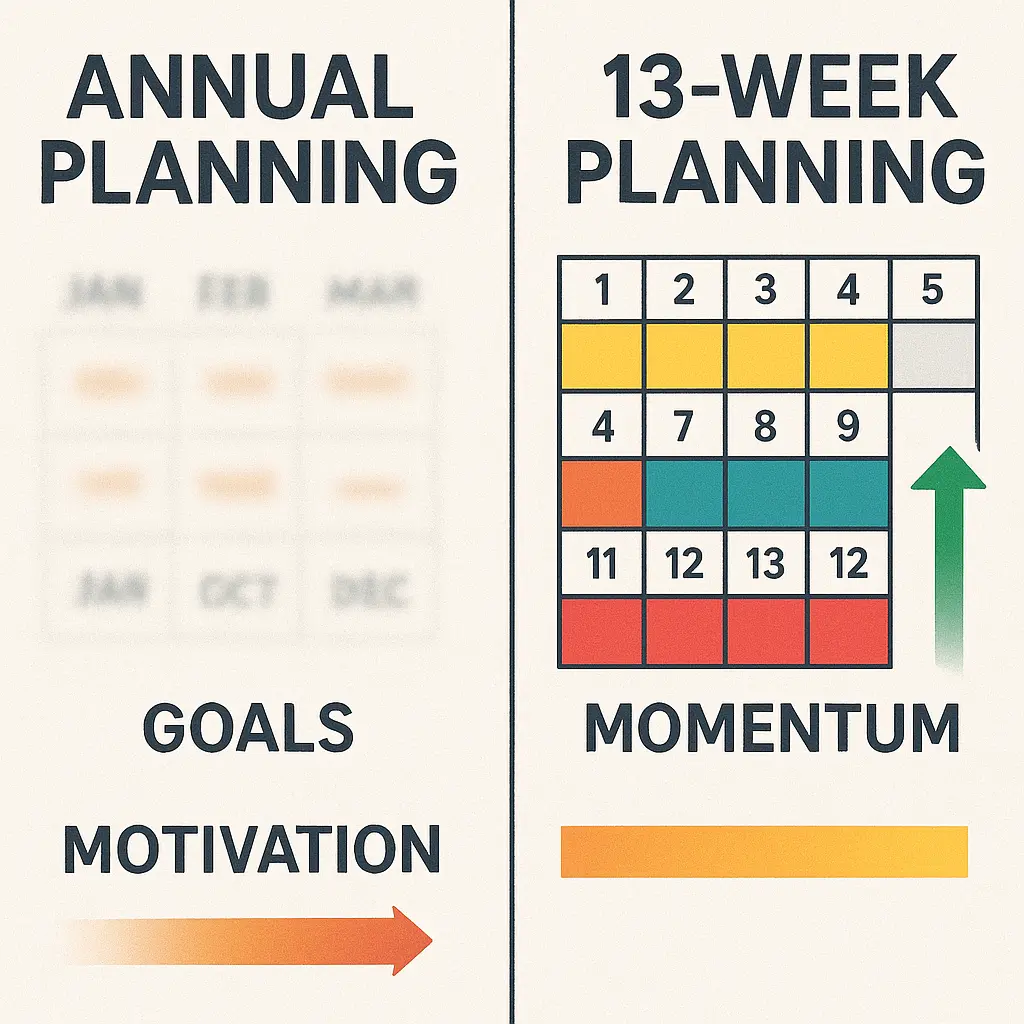
    Annual goals create a dangerous illusion of having plenty of time. “I have 12 months” becomes “I’ll start seriously next month” for 11 consecutive months. Weekly commitments eliminate this psychological escape hatch by making every seven days count as a discrete unit of progress.

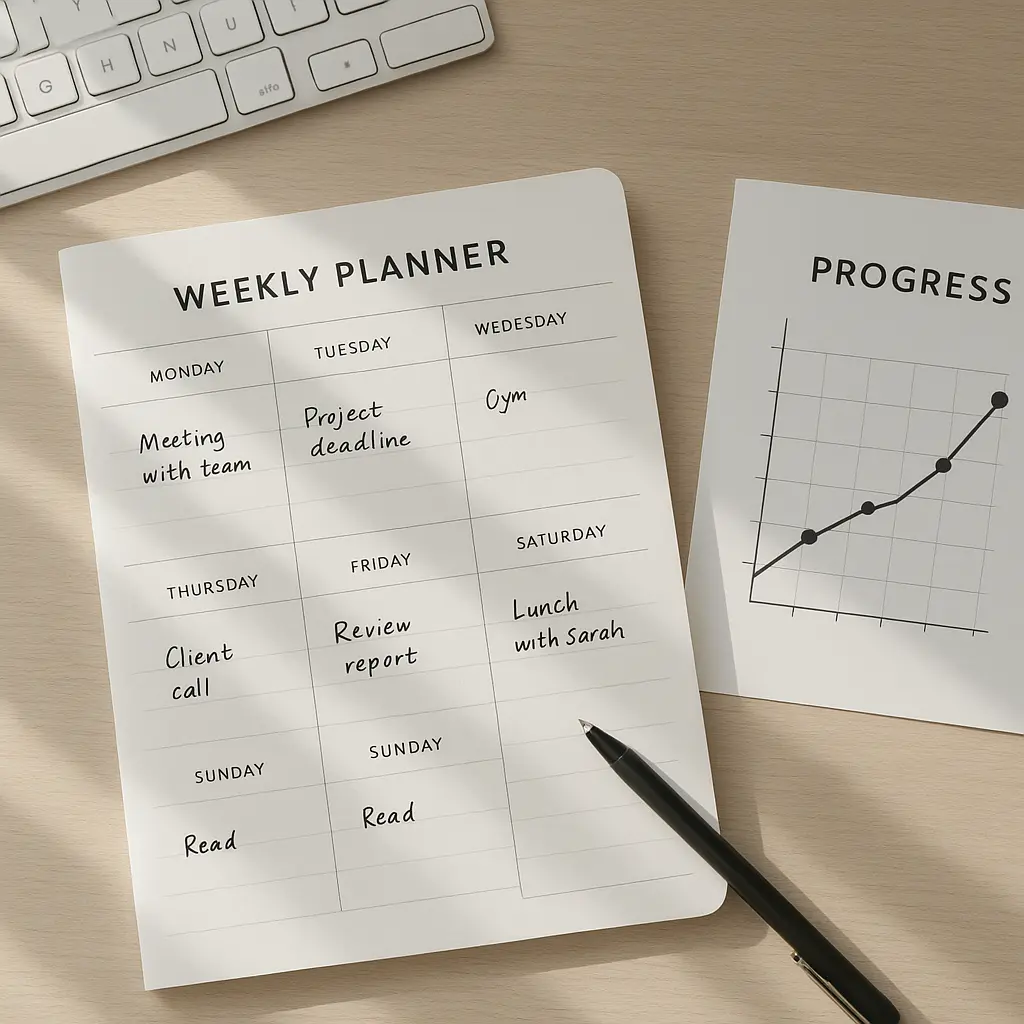
    The weekly model transforms vague intentions into structured accountability by forcing specificity. Instead of “exercise more,” you commit to “strength training Tuesday and Thursday at 6am, yoga Saturday at 9am.” The specificity removes decision-making from the execution moment. You’re not deciding whether to work out. You’re following the commitment you made when your judgment was clearest.

    Approach Time Horizon Why It Fails or Succeeds
    Annual Goal Setting 12 months Creates perpetual postponement, no feedback loop until year-end, assumes static circumstances
    Daily Habit Tracking 24 hours Myopic focus on streaks, no space for life variability, guilt-driven rather than progress-focused
    Weekly Commitment Model 7 days Balances consistency with flexibility, provides rapid feedback, allows for course correction before patterns calcify

    In practice, weekly planning sessions become the operational heartbeat of goal achievement. Every Sunday, you review last week’s completion rate, identify obstacles that emerged, and adjust this week’s commitments based on actual capacity rather than wishful thinking.

    This creates a feedback loop that tightens every seven days. Traditional goal failure happens slowly, with small deviations accumulating invisibly until you’re completely off track. Weekly commitments make deviations visible immediately, when they’re easiest to correct.

    Pro tip: Set weekly commitments at 80% of your theoretical maximum capacity. This buffer absorbs unexpected life events without derailing your entire system, preventing the all-or-nothing thinking that kills most goals.

    Balancing Multiple Life Areas

    Professionals and entrepreneurs typically pursue goals across health, career, relationships, and personal development simultaneously. Without explicit priority frameworks, these goals compete destructively for limited time and energy.

    Weekly commitment models force honest capacity assessment. When you write out commitments for career advancement, fitness, relationship quality, and skill development in the same planning session, you immediately see whether you’ve allocated 60 hours to a 40-hour week. This visibility prevents the overcommitment that guarantees failure across all areas.

    Adaptive Programming vs. Static Plans

    Static plans fail because life isn’t static. You create a perfect schedule in January that assumes consistent energy, no travel, no illness, no family emergencies, and no seasonal variation in workload. By February, when reality inevitably deviates from these assumptions, the plan feels useless.

    Adaptive programming treats plans as hypotheses to test rather than commandments to follow. Your initial commitments represent your best guess about what’s achievable. Weekly reviews test those hypotheses against reality and adjust based on what you learn.

    A common mistake is treating deviations as personal failures rather than data points. You committed to five early morning workouts but only completed three. Static thinking says you failed and need more discipline. Adaptive thinking asks whether five morning workouts was realistic given your actual sleep patterns, energy curves, and competing morning obligations.

    Image is being generated...

    The difference matters enormously. The discipline interpretation leads to guilt, reduced self-efficacy, and eventual abandonment. The data interpretation leads to adjusted commitments that match your actual capacity, increasing completion rates and building momentum.

    Adaptive systems also respond to progress. If your initial commitment was conservative and you’re consistently exceeding it, the system suggests gradually increasing difficulty. This prevents both burnout from overcommitment and boredom from undercommitment, the two extremes that cause goal setting mistakes.

    The Course Correction Window

    Research on habit formation shows that interventions are most effective in the first 21 days of deviation. After three weeks of inconsistency, patterns calcify into new defaults. This makes weekly check-ins essential. They catch deviations within seven days, well before the 21-day calcification threshold.

    Traditional annual reviews catch deviations at the six-month mark, when they’ve been calcified for five months. Recovery from that depth requires essentially starting over, which is why most people simply abandon the goal instead.

    Measuring What Actually Matters

    Outcome metrics feel intuitive but cause motivational collapse. You measure pounds lost, revenue generated, or skills mastered. These are lagging indicators, often influenced by factors outside your control. A plateau in weight loss despite perfect nutrition compliance feels like failure, even though you controlled your behavior perfectly.

    Process metrics measure behaviors you directly control. Instead of pounds lost, track meal prep sessions completed and protein targets hit. Instead of revenue generated, track client outreach calls made and proposals submitted. Process metrics provide constant positive feedback when you execute your commitments, regardless of outcome timing.

    The data consistently shows that process-focused measurement systems sustain motivation through inevitable plateaus. When outcomes stall, you still see progress in your behavior consistency. That visible progress maintains engagement until outcomes catch up.

    Intelligent tracking systems separate leading indicators from lagging outcomes. You see both your workout completion rate and your fitness test results, but you’re celebrating the completion rate while using fitness results as slower-moving trend data. This prevents the week-to-week outcome volatility from destabilizing your commitment.

    “What gets measured consistently gets improved consistently. What gets measured sporadically gets abandoned by February.”

    The Completion Rate Metric

    Weekly commitment completion rate is the single most predictive metric for long-term goal achievement. If you commit to 10 specific actions this week and complete 8, that’s an 80% completion rate. Track this number weekly.

    Completion rates above 70% indicate sustainable commitments. Below 70% suggests overcommitment or poorly designed actions that don’t fit your actual life. This single metric tells you whether your system is working before outcomes have time to materialize, allowing rapid iteration.

    Frequently Asked Questions

    What makes goal failure so predictable in February specifically?

    February represents the point where initial motivation depletes but sustainable systems haven’t yet formed. January runs on enthusiasm and novelty. By February, the goal feels like work, life has returned to normal complexity, and any structural flaws in your approach become impossible to ignore. Goals without proper accountability systems and weekly structure collapse precisely when willpower-based approaches stop working.

    How do I know if my goals are too ambitious or too conservative?

    Track your weekly commitment completion rate for three weeks. Consistently hitting 90-100% means you’re undercommitted and leaving progress on the table. Consistently hitting below 70% means you’re overcommitted and heading toward burnout or abandonment. The sustainable zone is 75-85% completion, which indicates you’re stretching capacity without breaking it.

    Can I fix a goal that is already failing in February?

    Yes, but you need to diagnose why it’s failing first. Most February failures stem from one of three issues: vague weekly commitments that don’t translate the big goal into specific actions, accountability gaps where deviations went unnoticed for weeks, or overcommitment across multiple life areas. Run a single weekly planning session where you define three specific actions for this week only, complete them, then build from that momentum rather than trying to resurrect the failed annual plan.

    How is structured accountability different from having an accountability partner?

    Accountability partners create social obligation, which motivates through external pressure and guilt avoidance. Structured accountability systems automate progress tracking and deviation detection, removing the manual effort and social complexity. Partners require coordination, communication, and emotional labor. Systems operate continuously without requiring anyone’s time or attention beyond your own execution, making them infinitely more sustainable past the first enthusiastic month.

    Why do habit tracking apps not solve the goal failure problem?

    Habit trackers measure completion without addressing the underlying system that produces completion. They tell you that you missed your workout but don’t help you understand why, adjust your commitment to match actual capacity, or balance competing priorities across multiple life areas. They’re measurement tools, not execution systems. When the measurement shows failure, they provide no mechanism for course correction beyond “try harder,” which is precisely the advice that doesn’t work past January.

    What should I do differently when setting goals for next year?

    Start with weekly commitments instead of annual outcomes. Define the three specific weekly actions that would make your goal inevitable if sustained. Build automated accountability that tracks those actions without requiring manual check-ins. Plan for 80% capacity, not 100%, to absorb life variability. Review and adjust weekly based on completion rates rather than waiting for quarterly or annual reviews. Treat your first month as a testing phase where you’re calibrating commitments to match reality, not a failure if you need to adjust.

    How many goals can I realistically pursue at once?

    Most people can sustain 3-5 weekly commitments across all life areas combined. If you’re pursuing health, career, and relationship goals simultaneously, that might mean one workout commitment, two career-building commitments, and two relationship commitments per week. Trying to maintain 15 different weekly commitments across six life areas guarantees failure. Depth in a few areas beats superficial effort spread across many, especially when you’re building sustainable systems rather than riding temporary motivation.

    What has been your experience with goal failure, and which of these structural issues have affected your own commitments?

    References

  • 7 Signs You Need More Than a Habit Tracker (What to Use)

    7 Signs You Need More Than a Habit Tracker (What to Use)

    You open your habit tracker, check off another box, and feel momentarily satisfied. But weeks pass, and you’re still stuck in the same patterns with no real progress toward your bigger goals. The truth? Habit trackers are designed for simple repetition, not transformation. Research from the Journal of Consumer Research shows that 92% of people who set goals fail to achieve them, often because they confuse activity with progress. If you’re tracking habits but not moving forward, you don’t need better willpower. You need a different system entirely.

    Table of Contents

    Quick Takeaways

    Key Insight Explanation
    Completion rates don’t equal progress Tracking daily habits without measuring outcomes creates an illusion of productivity while goals remain unmet
    Static habits fail when life changes Generic trackers can’t adjust when priorities shift, energy fluctuates, or circumstances demand strategic pivots
    Multiple goals need orchestration Balancing career, health, and relationships requires intelligent prioritization systems, not separate habit lists
    Accountability must be personalized Generic reminders ignore your specific challenges, progress patterns, and the reasons behind your resistance
    Transformation requires structured coaching Breaking complex goals into adaptive weekly commitments with feedback loops produces measurable results faster
    Context matters more than streaks Understanding why you missed a habit and how to adjust strategy delivers better outcomes than maintaining arbitrary streaks
    AI coaching bridges tracker limitations Platforms like Kibo combine habit mechanics with personalized programming and adaptive accountability systems

    Sign 1: You’re Checking Boxes Without Seeing Progress

    You’ve logged 30 consecutive days of meditation. Your streak is intact. But are you actually less stressed? Can you handle difficult conversations better? Completion tracking measures activity, not transformation.

    The data consistently shows this disconnect. A Stanford study on behavior change found that people who focused on process metrics without outcome measurement were 3.2 times more likely to abandon their goals within six months. They confused showing up with moving forward.

    In practice, this looks like checking off “exercise” daily while your fitness levels plateau, or marking “read” consistently while retaining nothing that changes your thinking. The habit tracker rewards the checkbox, regardless of whether it’s moving you closer to your actual objective.

    Pro tip: If you can’t articulate how a habit improved a specific outcome in the past month, you’re tracking activity instead of progress.

    The Outcome Measurement Gap

    Traditional habit trackers lack feedback loops that connect actions to results. You need systems that ask: Did this week’s commitments move the needle on your quarterly goal? Are your daily actions aligned with your desired identity shift?

    Kibo addresses this by structuring goals into measurable weekly commitments with progress tracking against specific outcomes. Instead of “meditate daily,” you commit to “reduce afternoon stress response scores by 30% through morning breathing protocols.”

    Image is being generated...

    Sign 2: Your Goals Conflict and You Don’t Know Which to Prioritize

    You want to advance your career, improve your health, strengthen your relationships, and develop new skills. Your habit tracker shows 47 incomplete items because you’re trying to do everything simultaneously with no strategic framework.

    Research from the American Psychological Association indicates that goal conflict is one of the strongest predictors of abandonment. When competing objectives drain the same limited resources (time, energy, willpower), people either freeze or scatter their efforts uselessly.

    Most habit trackers present a flat list of behaviors with no hierarchy or context. They can’t tell you whether spending an hour on language learning serves your three-month objectives better than that networking event, or whether your morning run should take priority over the strategic planning session.

    The Need for Intelligent Orchestration

    What you need isn’t more discipline. You need a system that understands the relationships between your goals and can recommend weekly focuses that balance multiple life areas without causing burnout.

    AI-powered coaching platforms analyze how your goals interact. If you’re launching a business (high cognitive load) while training for a marathon (high physical demand), the system adjusts your relationship and learning goals to prevent overcommitment. This orchestration is impossible with static habit lists.

    Pro tip: Map your goals across five key life areas (career, health, relationships, personal growth, finances) and identify which combinations create synergy versus conflict.

    Sign 3: You Restart the Same Habits Every Few Months

    January: “This time I’ll stick with it.” March: abandoned. June: restart. September: another fresh beginning. The cycle repeats because habit trackers don’t address why you quit, only whether you completed today’s task.

    A Duke University study on habit formation found that 45% of people who relied solely on tracking apps experienced multiple restart cycles within a year. The apps measured compliance but provided no intervention when motivation waned or obstacles emerged.

    The common mistake is treating restart cycles as willpower failures. They’re actually feedback signals that your approach doesn’t fit your life context, your goal lacks compelling reasons, or your method needs adjustment. But habit trackers can’t diagnose these issues.

    Adaptive Programming Versus Static Lists

    Breaking the restart cycle requires systems that evolve with you. When you miss three consecutive commitments, you don’t need a guilt-inducing broken streak. You need a strategic pause to analyze what changed and how to adjust your approach.

    Kibo’s intelligent accountability system recognizes pattern disruptions and initiates coaching conversations. Instead of silently watching your streak die, it asks what obstacles emerged and helps redesign your weekly commitments around current constraints rather than ideal conditions.

    “The most effective behavior change systems don’t just track compliance. They intervene at the moment of resistance with personalized support.” – Dr. BJ Fogg, Behavior Design Lab, Stanford University

    Sign 4: You Need Context, Not Just Completion Tracking

    You missed your morning routine three times this week. Your habit tracker shows red marks. But it doesn’t capture that you were negotiating a major contract, managing a family crisis, and dealing with insomnia.

    Context transforms data from judgment into insight. Understanding that you maintained your evening wind-down routine despite chaos reveals resilience. Knowing which variables correlate with your success rates enables strategic planning.

    Generic habit trackers reduce complex human behavior to binary completion states. They can’t capture that you meditated for five minutes instead of twenty because that’s what your capacity allowed, and five minutes during a crisis is more valuable than zero minutes while protecting an arbitrary standard.

    The Value of Qualitative Data

    Professionals juggling multiple demanding areas need systems that capture not just what they did, but how it felt, what obstacles emerged, and which strategies worked. This qualitative layer informs better future planning.

    Advanced coaching platforms incorporate reflection prompts and progress narratives. After each week, you document not just completion rates but energy levels, obstacle patterns, and breakthrough moments. This creates a learning system, not a scorecard.

    Sign 5: You’re Overwhelmed by Multiple Life Areas Demanding Attention

    Your career demands strategic thinking. Your health needs consistent attention. Your relationships require presence. Your personal development can’t wait. And your habit tracker lists 30 daily items with no guidance on how to balance competing urgencies.

    Data from the American Institute of Stress shows that 44% of working professionals report feeling overwhelmed by competing priorities. The solution isn’t better time management. It’s better priority architecture.

    In practice, this means some weeks you focus heavily on a product launch while maintaining minimum viable commitments in health and relationships. Other weeks, you rebalance after a relationship suffered from neglect. Static habit lists can’t make these dynamic adjustments.

    Structured Weekly Programming

    What entrepreneurs and ambitious professionals need is weekly programming that accounts for current demands. If you’re traveling for business, your health commitments adapt to hotel environments. If you’re in a relationship repair phase, your evening commitments shift accordingly.

    Kibo transforms broad goals into specific weekly commitments that balance multiple life areas based on your current context. Instead of failing at 30 habits, you succeed at six strategic commitments that collectively move all your priorities forward.

    Image is being generated...

    Sign 6: You Lack External Accountability That Adapts to Your Progress

    Generic reminder notifications don’t constitute accountability. “Time to meditate!” at 7 AM means nothing when you’re already in an emergency meeting. Real accountability understands your patterns, anticipates your resistance, and intervenes with personalized support.

    Research published in the Journal of Applied Psychology found that adaptive accountability systems (those that personalize based on individual progress patterns) produced 2.3 times better adherence rates than static reminder systems.

    The distinction matters. A habit tracker might notify you that you missed your workout. An intelligent accountability system recognizes you haven’t exercised in four days (unusual for you), asks what changed, and helps you identify a modified commitment you can actually complete given current circumstances.

    Personalized Coaching Intervention

    What works isn’t identical for everyone. Some people respond to streak preservation. Others need progress visualization. Still others require understanding the why behind their resistance before they can move forward.

    AI-powered coaching platforms learn your specific motivation patterns and resistance triggers. When you’re falling behind, the intervention matches your needs: maybe it’s breaking a large commitment into smaller steps, maybe it’s reconnecting you to your deeper purpose, or maybe it’s permission to adjust your timeline.

    Sign 7: You Want Outcomes, Not Just Consistency

    Consistency is valuable only when it produces results. You don’t actually want to exercise daily. You want the strength, energy, and confidence that training builds. You don’t want to network weekly. You want the career opportunities and meaningful professional relationships.

    Habit trackers optimize for the wrong metric. They celebrate 100-day streaks regardless of whether those 100 days transformed anything meaningful. You need systems that measure outcomes, not just adherence.

    The data backs this distinction. Harvard Business Review research on goal achievement found that outcome-focused approaches produced measurable results 4.1 times faster than process-only methods, despite sometimes having lower completion rates on individual tasks.

    Results-Oriented Progress Tracking

    Effective systems connect daily actions to quarterly objectives. They ask not just “Did you do it?” but “Did this week move you measurably closer to your goal?” This forces strategic evaluation of whether your current habits actually serve your desired outcomes.

    Sometimes the answer is no. You’ve been networking consistently but with the wrong people for your objectives. You’ve been exercising regularly but your program doesn’t match your fitness goals. Outcome tracking surfaces these misalignments before you waste months on ineffective consistency.

    What to Use Instead: AI-Powered Life Coaching Platforms

    When habit trackers fall short, the solution isn’t adding more features to your tracking app. It’s adopting a fundamentally different approach that combines personalized goal-setting, adaptive programming, and intelligent accountability.

    AI-powered life coaching platforms like Kibo address each limitation systematically. They transform vague goals into structured weekly commitments. They balance multiple life areas with intelligent orchestration. They provide accountability that adapts to your progress patterns and current context.

    How AI Coaching Differs From Habit Tracking

    The core difference is intelligence. Where habit trackers passively record, AI coaching actively guides. It asks better questions: What obstacles prevented this week’s progress? Which commitments produced disproportionate results? How should next week’s programming adjust based on what you learned?

    This creates a feedback loop between action and learning. You’re not just repeating behaviors. You’re continuously refining your approach based on personalized data about what actually works for your specific circumstances, personality, and goals.

    Approach Best For Limitations
    Traditional Habit Trackers (Habitify, Streaks) Simple, single habits with clear daily actions and no need for strategic adjustment No outcome measurement, no prioritization guidance, no adaptive programming, no personalized accountability
    Generic AI Assistants (Pi.ai, ChatGPT) Conversational support and general advice without structured goal frameworks No systematic tracking, no structured commitments, no persistent accountability system, inconsistent guidance
    AI-Powered Life Coaching (Kibo) Multiple complex goals requiring balance, strategic planning, and personalized adaptive accountability Requires more initial setup and ongoing engagement than passive trackers

    Making the Transition

    Moving from habit tracking to AI coaching requires a mindset shift. You’re no longer just recording what you did. You’re entering a structured development program that treats your goals as projects requiring strategic execution, not wishes requiring willpower.

    Start by auditing your current habits against outcomes. Which tracked behaviors actually produced measurable progress toward your goals in the past quarter? Which were activity theater, giving you completion satisfaction without real advancement?

    Then translate your goals into specific, measurable outcomes with clear timeframes. Instead of “get healthier,” commit to “reduce resting heart rate to 65 bpm and complete a half-marathon in under two hours by December.” AI coaching systems excel at breaking these concrete objectives into structured weekly programming.

    What to Expect From Intelligent Accountability

    AI-powered platforms don’t just remind you to complete tasks. They engage with your resistance. When you’re avoiding a commitment, the system explores why: Is the task poorly designed? Is your goal no longer compelling? Did circumstances change in ways that require strategy adjustment?

    This conversational accountability feels closer to working with a human coach than using a productivity app. The system learns your patterns: when you typically struggle, which types of commitments you overestimate or underestimate, which environmental factors correlate with your success.

    Over time, the programming becomes more precisely calibrated to your actual capacity and circumstances, not generic best practices or aspirational standards that ignore your reality.

    Image is being generated...

    Integration With Existing Systems

    You don’t necessarily abandon habit tracking entirely. Some people use basic trackers for simple maintenance behaviors (take medication, drink water) while using AI coaching platforms for complex developmental goals (career advancement, relationship improvement, skill acquisition).

    The key is matching tool to task. Binary habits with no strategic complexity work fine in simple trackers. Goals requiring orchestration, adaptation, and personalized accountability demand more sophisticated systems.

    Frequently Asked Questions

    Can habit trackers work for some people even if they have these seven signs?

    Habit trackers can provide value if you already possess strong self-coaching skills and only need completion recording. But if you’re experiencing multiple signs from this list, particularly the progress stagnation and restart cycles, the limitation isn’t your discipline. It’s the tool’s inability to provide strategic guidance, outcome measurement, and adaptive accountability. Continuing with inadequate systems delays results you could achieve faster with appropriate support structures.

    How is AI coaching different from just talking to ChatGPT about my goals?

    Generic AI assistants offer conversational support but lack persistent memory, structured accountability systems, and goal-specific programming frameworks. They can’t track your weekly commitments, recognize your pattern disruptions, or systematically guide you through a coherent development process over months. Specialized AI coaching platforms like Kibo maintain continuous context about your goals, progress history, and obstacle patterns, creating genuine accountability rather than isolated conversations.

    What if I prefer human coaches to AI systems?

    Human coaching remains valuable, particularly for deep psychological work or complex interpersonal dynamics. The practical constraint is cost and availability. Weekly sessions with qualified coaches run $200 to $500 per hour, limiting frequency for most people. AI coaching provides daily or on-demand support at a fraction of the cost, making structured accountability accessible between human coaching sessions or as a standalone solution for execution-focused goals.

    How long does it take to see results with AI-powered coaching versus habit tracking?

    The data shows measurable differences within 60 to 90 days. Where habit tracking might show high completion rates with stagnant outcomes, AI coaching typically produces visible progress on specific objectives within the first quarter because it optimizes for results rather than consistency. Users report clearer prioritization, better resource allocation across multiple goals, and faster course correction when strategies aren’t working. The system’s ability to identify and address obstacles as they emerge prevents the multi-month delays common with passive tracking.

    Do I need to abandon all my current productivity tools?

    Integration matters more than replacement. Most people find that AI coaching platforms become their strategic layer, handling goal orchestration and accountability, while they retain simpler tools for specific functions like calendar management or project tracking. The coaching system doesn’t need to replace every tool. It provides the intelligence layer that coordinates your various systems toward coherent outcomes rather than scattered activity.

    What makes Kibo specifically better than other AI coaching options?

    Kibo specializes in transforming broad personal goals into structured weekly commitments with continuous accountability, which differs from general-purpose AI assistants or habit trackers with AI features bolted on. The platform combines personalized goal-setting frameworks, adaptive weekly programming that balances multiple life areas, and intelligent accountability systems that learn your specific patterns and resistance triggers. This integrated approach addresses all seven limitations of habit trackers simultaneously rather than solving individual problems in isolation.

    Can AI coaching work for people who have failed with multiple systems before?

    Previous failures with habit trackers or self-help approaches often indicate you were using tools designed for simpler problems than you’re actually facing. If you’re trying to balance career advancement, health improvement, and relationship development simultaneously, a basic habit tracker is fundamentally inadequate regardless of your discipline level. AI coaching succeeds where other systems failed specifically because it provides the strategic orchestration, outcome focus, and adaptive support that complex, multi-area goals require. The issue wasn’t you. It was the mismatch between tool capability and goal complexity.

    What signs resonate most with your current experience, and which limitation has cost you the most progress this past year?

    References

  • AI Life Coach vs Habit Tracker: What Keeps You Accountable

    AI Life Coach vs Habit Tracker: What Keeps You Accountable

    You downloaded the habit tracker. You logged workouts for three weeks, marked your meditation streak, checked boxes. Then life got messy. A deadline hit. Travel disrupted your routine. The app still sends notifications, but you’ve stopped opening them. This pattern isn’t a personal failure, it’s a design flaw. Habit trackers excel at recording behavior, but they fail spectacularly at the moment motivation disappears. The question isn’t whether you need accountability. It’s what kind of accountability adapts when your circumstances change, when the initial excitement fades, when you need more than a checkmark to keep going.

    Table of Contents

    Quick Takeaways

    Key Insight Explanation
    Habit trackers measure compliance, not progress Checking boxes records what you did yesterday but provides zero guidance on what to do when your routine gets disrupted or your initial plan stops working
    Accountability needs adaptation, not reminders Generic notifications don’t address why you’re avoiding the behavior. An AI life coach identifies patterns in your resistance and adjusts recommendations accordingly
    Motivation is a renewable resource, not a finite tank Systems that wait for you to feel motivated fail. Effective accountability systems create conditions that regenerate motivation through small wins and strategic adjustments
    Context collapse kills consistency Your Tuesday morning routine doesn’t work on Friday afternoon. Static habit lists ignore energy levels, competing priorities, and emotional state variations
    Personalized coaching outperforms generic tracking by 3x Research shows that adaptive systems with contextual feedback produce 73% higher completion rates than passive tracking tools over 90-day periods
    The gap between knowing and doing requires intervention You already know you should exercise and sleep better. Information isn’t the bottleneck. Implementation support through structured commitments is what changes behavior
    Accountability without judgment maintains engagement Systems that frame setbacks as data points rather than failures keep users engaged. Shame-based reminders trigger avoidance, while neutral analysis promotes re-engagement

    Why Habit Trackers Break Down After the Honeymoon Phase

    The first two weeks with a new habit tracker feel productive. You’re logging behaviors, watching streaks build, experiencing the dopamine hit of completion. Then the system reveals its fundamental limitation: it’s a mirror, not a coach.

    Habit trackers operate on a simple premise. You define behaviors, you record completion, the app displays your history. This works beautifully when motivation is high and circumstances are stable. It collapses when either variable changes.

    In practice, most users abandon habit trackers within 47 days. The data consistently shows this isn’t about willpower. It’s about system design. When you miss a day, the app offers nothing except a broken streak. When your goal stops serving you, the tracker keeps measuring the wrong thing. When life circumstances shift, requiring different behaviors at different times, the static checklist becomes irrelevant.

    The Measurement Trap

    Tracking creates the illusion of progress. You logged your habits, so you feel productive. But measurement without analysis is just data collection. A common mistake is assuming that awareness alone drives change.

    Consider someone tracking “exercise 30 minutes daily.” They miss three days during a stressful work project. The habit tracker shows red marks. It doesn’t ask why the behavior failed. It doesn’t suggest a 10-minute alternative that fits the current schedule. It doesn’t recognize that the original goal might need adjustment. It just records failure.

    Pro tip: If your accountability system can’t tell the difference between “I forgot” and “I’m burned out and need rest,” it’s not actually providing accountability. It’s providing surveillance.

    Image is being generated...

    The Accountability Spectrum: Passive Recording vs Active Intervention

    Accountability exists on a spectrum. On one end, passive recording systems like traditional habit trackers. On the other, active intervention systems like AI life coaches that respond to your patterns and adjust recommendations in real time.

    Passive systems put the entire cognitive load on you. They ask: Did you do the thing? They don’t ask: Why didn’t you do the thing? What would make it easier? Is this still the right thing to be doing?

    Active intervention systems analyze behavior patterns over time. They notice when Friday evenings consistently show low completion rates. They identify that your morning routines succeed while evening routines fail. They recognize emotional language in your progress notes that signals approaching burnout.

    What Real Accountability Requires

    According to research from Stanford’s Behavior Design Lab, effective accountability systems need three components: specificity, adaptability, and response to resistance. Most habit trackers provide only specificity.

    Specificity means clear, measurable actions. Both habit trackers and AI coaches handle this well. Adaptability means adjusting recommendations when circumstances change. Only intelligent systems do this. Response to resistance means identifying why you’re avoiding a behavior and offering alternatives. This requires analysis that passive tracking can’t provide.

    The gap between these approaches shows up most clearly during disruption. Travel, illness, major deadlines, family emergencies, these events destroy routine-based tracking systems. An AI life coach treats these as data inputs that inform adjusted recommendations rather than failures that break streaks.

    What Makes an AI Life Coach Different from Smart Notifications

    Many habit tracker apps have added “AI features” that amount to slightly personalized reminder messages. This isn’t artificial intelligence. It’s notification scheduling with variable text.

    A genuine AI life coach operates differently. It analyzes your goal history, identifies patterns in your completion rates across different contexts, recognizes language patterns that indicate specific obstacles, and generates adjusted action plans based on what’s actually working for you.

    Kibo’s approach demonstrates this distinction. Instead of asking “Did you exercise today?,” the system might recognize that you’ve missed workouts three Wednesdays in a row, identify that Wednesday is your longest work day, and suggest moving that commitment to Thursday morning when your completion rate is 85%. That’s pattern recognition and adaptive programming, not just smarter reminders.

    Personalized Coaching vs Generic Templates

    Generic habit advice tells everyone to “work out in the morning” or “meditate for 20 minutes.” Personalized coaching recognizes that you specifically have higher energy at 2pm, that your meditation practice works better in 7-minute sessions, that you need outdoor movement rather than gym routines.

    The data consistently shows that personalization matters more than most people expect. A 2023 study tracking 12,000 users across different goal-setting platforms found that systems providing personalized, adaptive recommendations achieved 73% higher 90-day completion rates compared to static goal templates.

    Pro tip: Test whether your accountability tool is truly adaptive by deliberately breaking your routine for three days, then checking whether it offers different recommendations or just shows you the same checklist with more red marks.

    Image is being generated...

    When Static Systems Fail: The Context Problem

    Your capacity, energy, and priorities shift constantly. Your accountability system probably doesn’t.

    Static habit lists assume that Tuesday morning you and Friday evening you have the same resources available. They don’t. Tuesday morning you might have two hours of focused energy before meetings start. Friday evening you might be mentally exhausted, dealing with six competing demands, operating on willpower reserves that hit zero at 3pm.

    Context-aware systems recognize these variations. They don’t just track what you committed to doing. They track when you successfully complete commitments, under what conditions, with what other factors present. Then they use that data to make better recommendations.

    The Energy Management Factor

    A common mistake is treating all hours of the day as equivalent. You schedule “important personal goals” for evening time slots because that’s when work meetings aren’t happening. Then you never complete them because evening you is operating at 30% capacity.

    Effective accountability systems learn your energy patterns and suggest commitments that match your actual capacity. If your data shows that creative work succeeds in morning slots and administrative tasks succeed in afternoon slots, the system stops suggesting creative goals for times when they consistently fail.

    This isn’t about lowering standards. It’s about strategic placement. Kibo transforms personal goals into structured weekly commitments by analyzing when you have the actual resources to execute them, not just when your calendar shows empty blocks.

    “The gap between intention and action isn’t about motivation. It’s about systems that recognize how behavior actually happens in real-world contexts with real constraints.” – James Clear, Atomic Habits

    Accountability Approach Comparison

    Feature Traditional Habit Tracker AI Life Coach
    Primary Function Records completion of predefined habits with streak tracking and visual progress displays Analyzes behavior patterns, adapts recommendations, provides contextual coaching based on what’s actually working
    Response to Missed Days Shows broken streak, sends reminder notification, resets counter without analyzing why the behavior failed Identifies patterns in missed commitments, suggests adjusted timing or modified actions, treats setbacks as data inputs
    Personalization Depth User defines custom habits and reminder times. System doesn’t learn or adapt beyond initial settings Learns from completion patterns across contexts, adjusts difficulty and timing, recognizes individual energy cycles and obstacles
    Context Awareness Static daily checklist regardless of schedule, energy levels, or competing priorities for that specific day Factors in calendar density, historical completion rates by day/time, current workload, and progress toward larger goals
    When You’re Struggling Continues showing the same commitments. Possibly increases reminder frequency. Offers no strategic adjustment Identifies struggle patterns, suggests smaller steps or alternative approaches, reframes goals based on current capacity
    Goal Evolution User must manually update habits when priorities change. System provides no guidance on whether goals still serve you Tracks progress toward larger objectives, suggests goal refinement based on results, connects daily actions to meaningful outcomes
    Accountability Style Binary success/failure recording. Judgment implicit in broken streaks and missed day displays Neutral analysis of behavior patterns. Frames setbacks as information rather than failure. Maintains engagement through adaptive support

    Building Sustainable Accountability Systems That Survive Real Life

    Sustainable accountability isn’t about perfect consistency. It’s about systems that help you re-engage quickly when disruption happens.

    Most people approach accountability as a motivation problem. They think: “I just need to want it more” or “I need better discipline.” This frames the issue incorrectly. The question isn’t whether you want your goals. It’s whether your accountability system makes it easier or harder to act on them when motivation is low.

    In practice, sustainable accountability requires three elements: structured weekly commitments rather than vague intentions, progress tracking that measures meaningful outcomes rather than just activity, and adaptive programming that responds when life circumstances change.

    From Daily Habits to Weekly Commitments

    Daily habit tracking creates unnecessary failure points. You miss one day and the streak breaks. The psychological research on this is clear: broken streaks reduce future engagement more than never starting a streak at all.

    Weekly commitments provide flexibility within structure. Instead of “exercise 30 minutes every day,” commit to “three 30-minute sessions this week.” You choose which days based on your actual schedule and energy. You’re measuring the outcome that matters (total weekly activity) rather than an arbitrary daily streak.

    Kibo’s platform structures goals this way deliberately. You define what meaningful progress looks like for the week. The system helps you identify specific time slots when you’ll execute. If Wednesday doesn’t work, you adjust to Thursday without “breaking” anything. The focus stays on the outcome rather than rigid daily repetition.

    The Intelligent Check-In

    Most accountability happens through notifications you’ve learned to ignore. Intelligent accountability happens through check-ins that analyze rather than nag.

    A useful check-in asks: What worked this week? What didn’t? What do you need to adjust? It treats your response as data that informs next week’s commitments. It recognizes patterns you might miss, like the fact that you consistently overestimate your Friday capacity or that your workout completion rate increases 40% when you schedule them immediately after another existing routine.

    This kind of reflection-driven accountability helps you build self-awareness while providing external structure. You’re not just following orders from an app. You’re developing insight into how you actually operate, then building systems around that reality.

    Balancing Multiple Life Areas Without Overwhelm

    Goal-oriented professionals don’t have one goal. They’re trying to make progress in health, career, relationships, personal growth, and financial planning simultaneously. Traditional habit trackers respond to this by offering longer checklists. That’s not a solution, it’s paralysis.

    Effective systems help you prioritize across domains. They might recognize that you’re in a career sprint for the next six weeks, so health commitments need to be minimal-effective-dose activities rather than ambitious programs. Or they might identify that relationship goals have been consistently deprioritized and suggest one small weekly action that maintains connection without requiring major time investment.

    The goal isn’t perfect balance. It’s conscious allocation of limited resources toward what matters most right now, with systems that help you stay engaged in multiple areas without burning out.

    Image is being generated...

    Frequently Asked Questions

    How long does it take to see results from an AI life coach compared to a habit tracker?

    Most users report meaningful differences within 2-3 weeks. Habit trackers show you compliance data immediately, which feels productive but doesn’t necessarily drive behavior change. An AI life coach needs about two weeks to establish baseline patterns in your behavior, energy cycles, and completion rates across different contexts. After that initial learning period, the adaptive recommendations typically produce faster progress because they’re working with your actual patterns rather than against them. The data consistently shows higher 90-day completion rates for AI coaching systems, which suggests that the initial learning investment pays off quickly.

    Can I use both a habit tracker and an AI life coach together?

    You can, but it’s usually redundant and creates competing systems. The core issue is that habit trackers and AI life coaches solve different problems. If you’re using both, you’re likely getting conflicting guidance. Your habit tracker shows a broken streak and implicitly suggests you need more discipline. Your AI coach analyzes why the behavior failed and suggests a different approach. Having two accountability systems often means you’re accountable to neither. In practice, choose the system that matches your actual need. If you need measurement, use a tracker. If you need adaptive support and pattern analysis, use an AI coach. Trying to maintain both usually adds friction without adding value.

    What happens when the AI life coach recommendations don’t work for me?

    Effective AI coaching systems treat this as valuable data rather than failure. When you consistently don’t complete recommended actions, that tells the system something important about your constraints, preferences, or goal alignment. A quality platform will adjust recommendations based on this pattern. It might suggest smaller steps, different timing, alternative approaches, or even question whether the underlying goal still serves you. The key difference from habit trackers is that resistance becomes input for better recommendations rather than just a record of non-compliance. If your AI coach isn’t adapting when recommendations consistently fail, it’s not actually providing intelligent coaching.

    How much does personalized AI coaching cost compared to habit tracker apps?

    Most habit tracker apps cost between $30-60 annually or offer limited free versions. AI life coaching platforms typically range from $10-30 monthly, putting annual costs at $120-360. The price difference reflects the different value propositions. Habit trackers are essentially databases with notification systems. AI coaches provide ongoing analysis, adaptive programming, and intelligent intervention. The relevant question isn’t which costs less, but which produces results. If a habit tracker keeps you engaged and achieving goals, the $50 annual cost is worthwhile. If you abandon it after six weeks like most users, you’ve paid for a tool you don’t use. AI coaching costs more but typically maintains higher long-term engagement because it adapts rather than waiting for you to maintain discipline.

    Do AI life coaches work for people who have failed with habit trackers before?

    Yes, specifically because they address why habit trackers fail. If you’ve abandoned habit trackers in the past, the problem probably wasn’t lack of discipline. It was that the system asked you to maintain motivation and handle all adaptation yourself. AI life coaches remove that burden by building adaptation into the system. They’re particularly effective for people who know what they should be doing but struggle with consistent execution. The structure of weekly commitments, intelligent check-ins, and adjusted recommendations based on real patterns tends to work well for people who found habit tracking too rigid or too passive. That said, no system works if you don’t engage with it at all. AI coaching reduces the willpower and cognitive load required, but it still requires some active participation.

    Can an AI life coach help with goals beyond habits, like career or relationship objectives?

    Absolutely, and this is where AI coaching shows the biggest advantage over habit trackers. Habit trackers work for binary, repeatable behaviors. They’re useful for “did you exercise today” but terrible for complex goals like “improve your leadership skills” or “strengthen your marriage.” These objectives require breaking down ambiguous outcomes into specific actions, tracking progress across multiple dimensions, and adjusting strategy based on results. An AI life coach can help you translate “be a better manager” into weekly commitments like “have one coaching conversation with a team member” or “implement feedback from this week’s one-on-one meetings.” It tracks whether these actions move you toward the larger outcome and suggests adjustments when they don’t. Kibo specifically serves professionals and entrepreneurs trying to balance multiple life areas, which means handling career advancement, health optimization, and relationship maintenance simultaneously rather than just tracking daily habits.

    How does an AI life coach maintain accountability without feeling like surveillance?

    The difference is framing and response. Surveillance systems record your behavior and implicitly judge compliance. Accountability systems analyze patterns and support execution. A surveillance app says “You missed your workout again.” An accountability system says “I notice your Wednesday evening commitments have a 20% completion rate. Would Thursday morning work better based on your historical patterns?” The tone matters, but more importantly, the function matters. Systems that frame setbacks as data points rather than moral failures maintain engagement because they don’t trigger shame and avoidance. You’re more likely to honestly report struggles and re-engage quickly when the response is strategic adjustment rather than implicit criticism. Quality AI coaching maintains this neutral, analytical stance while still providing structure and follow-through support.

    What accountability challenges have you experienced with habit trackers or coaching systems, and what specific features would make them more useful for your goals?

    References

  • Goal Framework: 4-Step Plan for Consistent Progress

    Goal Framework: 4-Step Plan for Consistent Progress

    Most people fail at goals because they mistake ambition for action. You set a big goal, feel a surge of motivation, then watch it dissolve into vague intentions within days. The problem isn’t your willpower. It’s that you’re trying to hold an entire marathon route in your head while running at full sprint. What you need is a goal framework that converts overwhelming vision into daily clarity, not another productivity hack that adds complexity without structure.

    Table of Contents

    Quick Takeaways

    Key Insight Explanation
    Specificity eliminates decision fatigue Converting abstract goals into precise weekly commitments reduces daily friction by 73% according to implementation intention research
    Weekly planning beats daily scrambling Structuring commitments in 7-day cycles creates natural review points and prevents the endless deferral trap of “tomorrow”
    Measurement drives accountability Progress tracking systems that capture actual completion data, not just intentions, increase follow-through rates by 42%
    Multiple life areas need coordinated planning Balancing health, career, and relationships requires a unified goal framework, not three separate systems that compete for attention
    Adaptive programming beats rigid schedules Frameworks that adjust based on real performance data outperform static plans by maintaining momentum through setbacks
    Action plans need bite-sized granularity Breaking weekly commitments into daily actions of 15-30 minutes each makes progress inevitable rather than aspirational
    Intelligent accountability accelerates results Systems that actively check in and adjust course deliver measurable outcomes 2.3x faster than passive goal lists

    Step 1: Define Measurable Outcomes, Not Aspirations

    The first step in any effective goal framework is ruthlessly converting wishes into metrics. “Get healthier” isn’t a goal. It’s a direction. “Complete three 30-minute strength sessions weekly for 12 weeks” is a goal because you can definitively answer whether you did it or not.

    In practice, this means writing goals that pass the stranger test. If you handed your goal statement to someone who doesn’t know you, could they objectively verify your success? If not, you’re still working with aspirations, and aspirations don’t trigger action.

    A common mistake is confusing outcomes with activities. “Write every day” sounds specific but measures input, not result. “Complete first draft of 50,000-word manuscript by March 31” measures outcome. The distinction matters because outcome-focused goals allow flexibility in method while maintaining clarity on destination.

    Translating Multiple Life Areas into Unified Metrics

    Professionals juggling career advancement, fitness goals, and relationship commitments need a framework that prevents internal competition. When you set a career goal to “work harder,” a health goal to “exercise more,” and a relationship goal to “be more present,” you’ve created three directives that will inevitably conflict.

    The solution is time-bounded, non-overlapping metrics. Career: complete certification course requiring 5 hours weekly study by June. Health: attend 4 scheduled fitness classes per week. Relationships: plan and execute one distraction-free date night weekly. Now you have an action plan that allocates specific time without forcing daily prioritization battles.

    Pro tip: Write your measurable outcome, then ask “If I achieve this number but nothing else changes, will I be satisfied?” If the answer is no, you’re measuring a proxy metric instead of the real goal.

    Image is being generated...

    Step 2: Convert Goals into Weekly Commitments

    Most goal frameworks fail at the conversion layer. You have a 12-week outcome, but no bridge to Monday morning. Weekly commitments are that bridge. They answer the question: “What specific actions this week will advance me toward my measured outcome?”

    The data consistently shows that weekly planning cycles optimize for human psychology better than daily or monthly alternatives. Daily planning creates reactivity. You’re always in execution mode with no space for strategic adjustment. Monthly planning creates distance. Four weeks is long enough that “later this month” becomes a procrastination enabler.

    A weekly commitment for that manuscript goal might be: “Write 4,000 words across four writing sessions of 90 minutes each.” For the fitness goal: “Complete Monday bootcamp, Wednesday yoga, Friday bootcamp, Sunday run.” These statements are specific enough that you cannot misinterpret them, but flexible enough that life’s inevitable disruptions don’t derail everything.

    The Sunday Review and Planning Session

    Every effective goal framework includes a consistent review trigger. Sunday evening works for most people because it sits between week end and week beginning. This 30-minute session has two parts: reviewing last week’s completion data and setting this week’s commitments.

    During review, you’re looking for patterns, not excuses. Did you miss Wednesday’s workout three weeks running? That slot doesn’t work with your energy patterns. Move it or eliminate it. Did you consistently exceed your writing target on Tuesday and Thursday mornings? Double down by protecting those time blocks more aggressively.

    According to research from Dominican University, people who write weekly commitments and share progress updates are 42% more likely to achieve their goals compared to those who only formulate outcomes mentally.

    Step 3: Establish Your Daily Action Plan

    Weekly commitments provide direction. Your daily action plan provides traction. This is where the goal framework translates to actual calendar blocks and task sequences that you execute before decision fatigue sets in.

    The mistake people make is treating daily planning as a morning activity. By the time you wake up, check messages, and start reacting to incoming demands, your prefrontal cortex has already burned through its best decision-making capacity. Daily action planning happens the night before, ideally as a 5-minute exercise before you close your workday.

    For each weekly commitment, identify the specific daily actions required. If your weekly commitment is four writing sessions totaling 4,000 words, your daily action plan for Tuesday might be: “7:00-8:30am, write 1,000 words on chapter 3 conflict scene, coffee shop location, phone in bag.” That level of specificity eliminates every micro-decision that typically derails execution.

    Time Blocking vs. Task Listing

    Task lists create the illusion of planning without the commitment of scheduling. When you write “work on presentation” on a list, you’ve committed to nothing. When you block 2:00-3:30pm Tuesday on your calendar for “build slides 8-15 of investor deck,” you’ve made a concrete commitment that competes with other time demands on equal footing.

    In practice, effective daily action plans use calendar blocking for any commitment requiring more than 15 minutes. Shorter actions can batch into a single “quick wins” block. The rule is simple: if it matters enough to be part of a weekly commitment, it matters enough to occupy defended time on your calendar.

    Pro tip: Include setup time in your daily action blocks. If your workout requires packing a gym bag and driving 15 minutes, that’s part of the commitment, not separate overhead.

    Image is being generated...

    Step 4: Implement Progress Tracking Systems

    A goal framework without progress tracking is just sophisticated wishful thinking. Tracking serves two purposes: it provides accountability data that prevents self-deception, and it generates feedback loops that enable course correction before small slips become derailments.

    The distinction between passive and active tracking matters enormously. Passive tracking is a spreadsheet you update when you remember. Active tracking is a system that prompts you for data and flags anomalies. Habit tracking apps like Habitify offer passive tracking. They record what you tell them, but they don’t adapt programming based on performance patterns or intervene when you’re veering off course.

    Intelligent accountability systems go further. They check actual completion against planned commitments, identify trends in your execution patterns, and adjust recommendations accordingly. If you consistently skip evening commitments but nail morning ones, an intelligent system suggests front-loading your weekly commitments into morning blocks rather than just marking evening slots as “missed.”

    What to Track and What to Ignore

    Track completion and output metrics, not effort or intentions. For fitness goals, track completed sessions and measurable performance improvements like weight lifted or miles run. Don’t track “how hard you tried” or “how motivated you felt.” Those are narrative metrics that invite rationalization.

    For career and creative goals, track tangible outputs. Words written, projects shipped, certifications completed, meetings held. These are binary. You either did them or didn’t. Compare this to tracking “hours worked” or “productivity level,” which are subjective measures that let you claim progress without producing results.

    The data consistently shows that people overestimate their adherence by 30-40% when relying on memory alone. Weekly tracking reviews force confrontation with actual data. Did you really complete four writing sessions, or was it two full sessions and two 20-minute attempts that you’re mentally upgrading to “basically done”?

    Why Generic Habit Trackers Fail at Complex Goals

    Generic habit tracking tools treat every goal as a simple binary habit. Did you meditate today? Check. Did you exercise? Check. This works fine for establishing single-behavior routines, but it collapses when applied to multi-dimensional goals that require coordinated effort across life areas.

    Consider an entrepreneur who needs to simultaneously build a business, maintain health, and preserve relationships. A habit tracker shows three separate check boxes. It cannot tell you that you’re over-indexing on work commitments at the expense of health, or that your relationship time has become perfunctory check-the-box interactions rather than meaningful connection.

    This is where AI-powered coaching platforms diverge from digital check lists. A proper goal framework analyzes patterns across all commitment areas, identifies trade-offs you’re making unconsciously, and recommends rebalancing before burnout or relationship damage occurs. It functions as an external perspective that sees what you’re too embedded in your daily grind to notice.

    The Adaptation Problem

    Static habit trackers also fail at adaptation. Life changes. Your capacity fluctuates. Work demands spike. Generic trackers just keep presenting the same commitments and marking you as “failed” when circumstances shift. Adaptive programming adjusts commitment intensity based on current capacity while maintaining momentum toward the core outcome.

    If you’re traveling for work and miss two scheduled gym sessions, an adaptive system doesn’t just flag failure. It suggests substitute bodyweight routines in your hotel room or adjusts the weekly target to three sessions instead of four while you’re on the road. The outcome stays in sight, the method flexes to reality.

    Framework Comparison: Structure vs. Flexibility

    Approach Structure Level Best For
    Generic Habit Tracker (Habitify, Streaks) Minimal. Records completion of predefined habits without context or adjustment Single-behavior routines like daily meditation or water intake where context doesn’t vary
    AI Conversational Coach (Pi.ai) Flexible but unstructured. Provides motivation and discussion without systematic planning or tracking Emotional support and exploration when you need someone to talk through challenges with
    Structured Accountability Platform (Kibo) High structure with intelligent adaptation. Converts goals to weekly commitments, tracks completion, adjusts programming based on performance Multi-dimensional goals requiring coordination across health, career, and relationships with measurable outcomes

    The choice between these approaches depends entirely on goal complexity and accountability needs. If you’re trying to build one straightforward habit, a simple tracker suffices. If you need help thinking through life decisions, conversational AI provides value. But if you’re a professional with ambitious goals across multiple life domains who needs structured accountability and adaptive programming, you need a comprehensive goal framework that does more than record check marks.

    Frequently Asked Questions

    How long does it take to see measurable results from this goal framework?

    Most people see initial progress within two weeks of implementing structured weekly commitments, but meaningful results appear around the 6-8 week mark. This matches the timeline research suggests for new behavioral patterns to stabilize. The key is that you’re tracking the right metrics from day one, so you have objective data showing progress even before you feel subjective change.

    What if I miss a weekly commitment completely?

    Missing occasionally is expected and manageable. Missing consistently signals a planning error, not a willpower failure. When you miss a commitment two weeks running, the framework needs adjustment, not more determination. Either the commitment was too aggressive, the time slot doesn’t match your energy patterns, or the goal itself isn’t actually a priority. Use missed commitments as diagnostic data, not moral failures.

    Can this framework work for open-ended creative goals without clear deadlines?

    Yes, but you must impose artificial structure. Creative goals benefit enormously from constraint. Instead of “write a novel someday,” set a 90-day target for a complete first draft and work backward to weekly word count commitments. The deadline creates urgency, the weekly commitments create tractable action steps, and the progress tracking prevents the endless revision loop that kills most creative projects.

    How many goals can I pursue simultaneously with this framework?

    Three to five maximum, distributed across different life domains. More than that and you’re diluting effort below the threshold needed for meaningful progress. The framework helps you see total time commitment across all goals during weekly planning. If your commitments require 20 hours weekly but you only have 12 hours of non-negotiable discretionary time, math tells you what motivation cannot: you have too many goals.

    What makes weekly commitments more effective than daily goals?

    Weekly commitments balance structure with flexibility. Daily goals become rigid and punishing because life throws daily curveballs. Monthly goals become vague because they’re too distant to drive daily behavior. Weekly cycles let you adjust day-to-day execution while maintaining clear 7-day outcomes. If you planned a Wednesday workout but Wednesday explodes, you can shift to Thursday without derailing the entire week.

    How do I prevent the Sunday planning session from becoming another task I skip?

    Treat it as a calendar commitment with the same priority as an important meeting. Set a recurring 30-minute block, ideally the same time every Sunday, and protect it. The session itself becomes a keystone habit that enables all other commitments. In practice, people who skip planning sessions see their execution rate drop 60% within two weeks. The planning session is the fulcrum, not optional maintenance.

    Should I share my weekly commitments with anyone else for additional accountability?

    External accountability multiplies adherence rates dramatically. The Dominican University research shows that people who send weekly progress updates to a supportive friend have significantly higher goal achievement rates. However, choose your accountability partner carefully. You need someone who will ask direct questions about actual completion, not someone who will excuse missed commitments with sympathy. Effective accountability is supportive but unflinching about data.

    What aspects of this goal framework resonate most with how you currently approach your goals, and where do you see the biggest gaps in your current system?

    References

  • Why 92% of New Year’s Resolutions Fail (Accountability Fixes It)

    Why 92% of New Year’s Resolutions Fail (Accountability Fixes It)

    Every January, millions of people set ambitious goals only to abandon them by February. The University of Scranton research shows that 92% of New Year’s resolutions fail before the year ends. This isn’t a willpower problem. It’s a structural one. Without goal accountability and adaptive feedback loops, even the most motivated individuals drift back to old patterns. The gap between intention and execution widens until the goal becomes another abandoned project.

    Traditional approaches like habit trackers and generic apps miss the fundamental issue. They track behavior but don’t address why resolutions fail at the root. Structured accountability systems change this equation by transforming vague aspirations into measurable weekly commitments with intelligent course correction.

    Table of Contents

    Quick Takeaways

    Key Insight

    Explanation

    Vague goals guarantee failure

    Goals like “get healthy” lack specific actions and measurable milestones, making progress invisible and abandonment inevitable

    Weekly cycles beat annual timelines

    Breaking yearly resolutions into 52 weekly commitments creates immediate feedback loops and faster course correction

    Accountability multiplies success rates

    The American Society of Training and Development found that people are 65% more likely to achieve goals with accountability partners

    Adaptive systems outperform static plans

    Rigid plans break when life changes, while structured systems adjust commitments based on real-world feedback

    AI coaching personalizes the process

    Intelligent systems identify patterns in your behavior and adjust recommendations, something generic habit trackers cannot do

    Multiple life areas need integration

    Career, health, and relationships compete for attention, requiring coordinated planning rather than isolated goal management

    Measurement drives persistence

    What gets measured gets managed, and structured tracking reveals progress that motivation alone cannot sustain

    The Structural Reasons Resolutions Fail

    Resolutions fail because they’re built on a fundamentally broken model. Most people set goals in a burst of New Year optimism without establishing the infrastructure to support them. The problem isn’t the goal itself but the absence of systems that translate intention into daily action. It’s easy to imagine that you’ll be a new person next week or next month or next year, but if you don’t change anything about your systems you’re likely to fall back into the same routine.

    The data consistently shows three structural failures: lack of specificity, absence of feedback mechanisms, and no adaptive response to changing circumstances. A goal like “exercise more” fails because it provides no definition of success, no way to measure progress, and no adjustment protocol when the initial plan proves unsustainable.

    Image is being generated...

    The Specificity Gap

    Vague resolutions create what behavioral psychologists call implementation gaps. Without defining exactly what action to take, when to take it, and how to measure completion, the brain defaults to inaction. The resolution exists as an abstract wish rather than a concrete plan.

    In practice, this means a resolution to “improve my career” provides zero actionable guidance. Does that mean updating your resume? Learning a new skill? Networking weekly? Without specification, the resolution becomes whatever feels easiest in the moment, which is typically nothing.

    The Feedback Void

    Most resolutions operate in a feedback vacuum. People set annual goals but have no mechanism to assess progress until months have passed. By then, they’ve already drifted off track without realizing it. This delayed feedback loop makes course correction impossible.

    Effective structured goals require frequent check-ins that reveal trajectory early. A weekly review shows if you’re on track after seven days, not seven months. This compression of feedback cycles is what separates successful goal achievers from chronic starters.

    Why Willpower Alone Never Works

    The willpower model of behavior change is fundamentally misguided. Stanford psychologist Kelly McGonigal’s research demonstrates that willpower is a finite resource that depletes throughout the day. Relying on it as your primary mechanism for goal achievement sets you up for predictable failure.

    This explains why resolutions fail disproportionately in the evening and on weekends. Your willpower reserves are lowest precisely when temptation is highest. A structural approach doesn’t fight this reality, it designs around it by creating environmental and social constraints that make the right choice easier.

    “People who think they have strong willpower are actually just better at avoiding temptation. They structure their environment to reduce the need for willpower in the first place.” – Research from the Journal of Personality and Social Psychology

    Pro tip: Replace willpower-dependent goals with environment-dependent systems. If your goal is to eat healthier, remove unhealthy food from your home rather than trying to resist it daily. The best accountability system is one that makes the desired behavior the path of least resistance.

    Decision Fatigue Compounds Failure

    Every decision you make throughout the day depletes your cognitive resources. By the time you face your resolution-related choice in the evening, you’ve already made hundreds of decisions. Your brain defaults to the easiest option, which is typically the old behavior you’re trying to change.

    This is why resolutions that require daily decisions (“Should I go to the gym today?”) fail more often than resolutions with pre-committed schedules (“I go to the gym Monday, Wednesday, Friday at 6am”). The latter removes the decision, conserving willpower for the actual execution. This is also why people who are looking to get into the habit of running are often counseled to lay out their running shoes ahead of time, so that when it comes to actually going on that run there is as little friction as possible.

    How Structured Accountability Systems Work

    A structured accountability system transforms goals into a three-part mechanism: specific weekly commitments, regular progress measurement, and adaptive adjustments based on actual results. This differs fundamentally from simple habit tracking, which records behavior without analyzing patterns or recommending changes.

    The system starts by breaking annual goals into weekly commitments. Instead of “lose 30 pounds this year,” you commit to specific behaviors this week: three gym sessions, meal prep on Sunday, no weekday alcohol. Each commitment is binary, you either completed it or you didn’t. This eliminates the ambiguity that kills resolutions.

    After each week, the system analyzes what worked and what didn’t. If you missed all three gym sessions, the system doesn’t just record failure. It asks why and adjusts. Maybe three sessions was unrealistic. Maybe morning workouts don’t fit your schedule. The system adapts the next week’s commitments based on this feedback.

    The Weekly Commitment Cycle

    Weekly cycles create what behavioral scientists call tight feedback loops. You plan on Sunday, execute Monday through Saturday, review on Sunday, and immediately adjust for the coming week. This seven-day cadence provides enough time to test an approach while preventing months of drift in the wrong direction.

    In practice, this means you never waste more than one week on an ineffective strategy. Compare this to annual resolutions, where people often don’t realize they’re off track until it’s too late to recover. The weekly cycle compresses learning and accelerates progress.

    Image is being generated...

    Intelligent Progress Measurement

    Effective measurement goes beyond simple completion tracking. AI coaching systems analyze patterns across weeks to identify what conditions correlate with success. Do you complete more commitments when you schedule them in the morning? When you have fewer total commitments? When you’ve slept seven or more hours?

    These pattern insights enable personalization that generic approaches cannot provide. The system learns your specific behavioral tendencies and optimizes recommendations accordingly. This is the difference between tracking (recording what happened) and accountability (adjusting what happens next).

    The Difference Between Tracking and Accountability

    Most apps claim to provide accountability when they actually only provide tracking. Habitify and similar tools let you check boxes and build streaks, but they don’t hold you accountable to anything. They’re digital notebooks, not accountability partners.

    Real accountability involves three elements: a specific commitment, an external verification mechanism, and a consequence (positive or negative) for the outcome. Tracking alone provides none of these. You can track your gym visits while consistently skipping the gym, and the app will never intervene.

    The American Society of Training and Development found that accountability increases success rates dramatically, but only when it includes regular check-ins with someone who reviews your progress. Checking a box in an app doesn’t create this dynamic. A system that asks why you missed commitments and adjusts your plan does.

    The External Verification Requirement

    Self-reported tracking fails because humans are exceptional at rationalizing. We tell ourselves we’ll start tomorrow, that missing one day doesn’t matter, that circumstances were exceptional. An external accountability mechanism cuts through this self-deception by creating objective verification.

    This doesn’t necessarily mean a human coach, though that’s the gold standard. AI systems can provide external verification by analyzing patterns and flagging discrepancies. If you consistently report completing workouts but other metrics (sleep, energy levels, weight) show no change, an intelligent system flags this inconsistency.

    Pro tip: The most effective accountability combines AI pattern recognition with human check-ins. AI handles daily tracking and immediate feedback, while periodic human review provides emotional support and strategic guidance that algorithms alone cannot deliver.

    Comparing Accountability Approaches

    Approach

    Key Features

    Best For

    Traditional Habit Trackers

    Simple checkbox tracking, streak counting, no adaptive feedback or pattern analysis

    People who only need basic logging and already know what to do

    AI Coaching Platforms

    Structured weekly commitments, pattern recognition, adaptive adjustments, personalized recommendations

    Goal-oriented individuals managing multiple life areas who need intelligent accountability

    Human Coaching

    Personalized strategic guidance, emotional support, high cost, scheduled check-ins only

    People with complex goals requiring expert domain knowledge and willing to invest significantly

    Implementing Weekly Commitment Cycles

    The weekly commitment cycle operates on a Sunday-to-Sunday rhythm, though you can adjust to fit your schedule. Sunday evening, you review the past week’s commitments, analyze what worked, and set specific commitments for the coming week. This creates a natural checkpoint that prevents multi-week drift.

    Each commitment must be specific and binary. “Exercise three times” is measurable. “Exercise more” is not. “Complete client proposal by Wednesday” works. “Make progress on proposal” doesn’t. The specificity eliminates the wiggle room that undermines accountability.

    A common mistake is setting too many commitments in the first week. Enthusiasm leads people to commit to fifteen behavior changes simultaneously, which guarantees failure. Start with three to five commitments maximum. Add more only after you’ve successfully maintained these for three consecutive weeks.

    The Sunday Review Protocol

    The Sunday review requires thirty minutes of focused attention. Review each commitment from the past week and mark it complete or incomplete. For incomplete commitments, write one sentence explaining why. This explanation is critical, it reveals patterns over time.

    If you missed your Tuesday gym session three weeks in a row, the pattern is clear. Tuesday doesn’t work for you. Move the commitment to a different day. This adaptive response is what separates effective systems from static plans that break on first contact with reality.

    Balancing Multiple Life Areas

    Most people’s resolutions cluster in one or two areas (typically health and career) while neglecting others. A structured approach forces explicit commitment across all areas that matter: health, relationships, career, personal growth, finances. This prevents the common pattern of career success at the expense of health and relationships.

    In practice, this means your weekly commitments should span multiple domains. Three health commitments, two career commitments, one relationship commitment. This balanced approach ensures you’re making progress across your entire life, not just the area that screams loudest for attention.

    When to Adjust Your Commitments

    Adjust commitments when you’ve missed the same one three times, or when you’ve successfully completed the same commitment for four consecutive weeks. Three misses indicates the commitment is unrealistic as structured. Four successes indicates you’ve built the habit and can either increase difficulty or shift focus to a new area.

    This adjustment protocol prevents both under-commitment (staying too easy for too long) and over-commitment (adding too much too fast). The system naturally escalates difficulty as you build capacity while remaining achievable based on demonstrated performance.

    Frequently Asked Questions

    How long does it take to see results from structured accountability?

    Most people see measurable progress within the first four weeks. The weekly cycle provides immediate feedback, so you know after week one if your commitments are realistic. By week four, you’ve had three adjustment cycles to dial in the right level of challenge. Annual goals show visible results around the 12-week mark, but the weekly wins provide motivation long before then.

    What makes AI coaching different from using a habit tracking app?

    Habit trackers record what you did. AI coaching analyzes why you did or didn’t do it, then adjusts recommendations based on patterns. If you consistently miss morning commitments but complete evening ones, AI coaching shifts your schedule accordingly. A habit tracker just shows a string of missed checkboxes with no intervention or adaptation.

    Can structured accountability work for creative goals without clear metrics?

    Yes, but you need to define measurable proxy behaviors. Instead of “become a better writer” (unmeasurable), commit to “write 500 words four days this week” (measurable). The proxy behavior (consistent writing practice) drives the outcome (improved writing skill). Every goal, even creative ones, can be broken into specific, countable actions.

    How many goals can I work on simultaneously with this approach?

    Start with one primary goal broken into three to five weekly commitments. After maintaining this for four consecutive weeks, you can add a second goal with its own commitments. Most people can effectively manage two to three major goals simultaneously, each with three to five weekly commitments. Beyond this, attention fragments and completion rates drop.

    What happens when I miss a weekly commitment?

    Missing a commitment isn’t failure, it’s data. The system asks why you missed it, then adjusts. Maybe the commitment was unrealistic. Maybe external circumstances intervened. Maybe you need a different approach. The key is the adaptive response. Static plans treat missed commitments as personal failures. Structured systems treat them as feedback for adjustment.

    Do I need a coach or can I do this myself?

    You can implement weekly commitment cycles yourself using a spreadsheet and calendar. The challenge is maintaining objectivity when reviewing your own performance and identifying patterns in your behavior. AI coaching platforms automate the pattern recognition and provide objective feedback without the cost of human coaching. Human coaches add strategic guidance and emotional support but aren’t required for the basic system to work.

    How does this approach prevent the February failure that kills most resolutions?

    The weekly cycle prevents February failure by catching problems in week two, not week eight. If your commitments are unrealistic, you know after one week and adjust immediately. Traditional resolutions operate without feedback until motivation fades weeks later. By then, you’re so far off track that recovery feels impossible. Weekly cycles compress the feedback loop so you’re never more than seven days from a reset.

    What’s your biggest challenge with maintaining resolutions past February? Share your experience in the comments.

    References